
the men who sailed into the Pacific
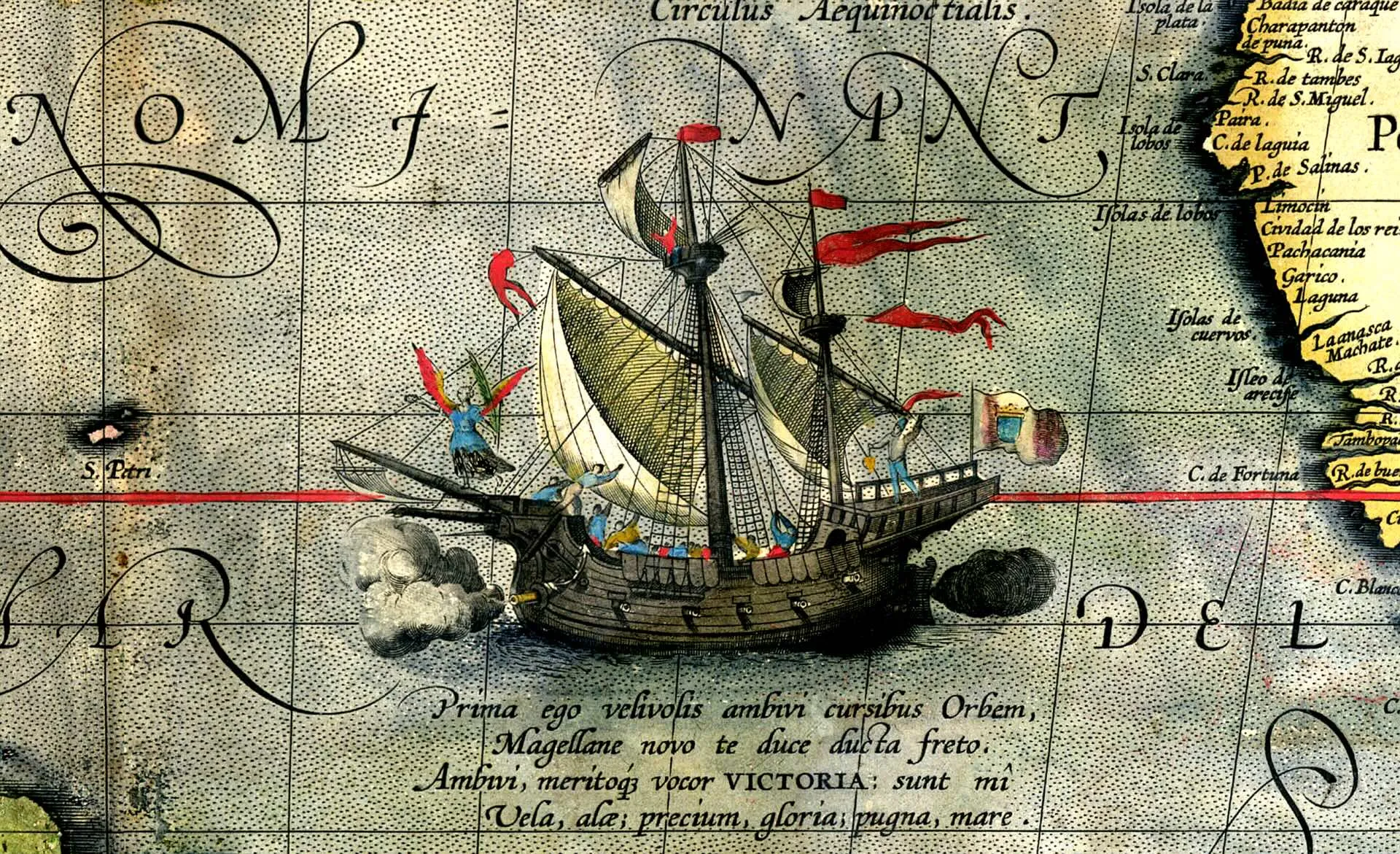
the 16th century is a foreign country; they do things differently there.
An accurate map of the globe did not exist although several versions circulated. Some created by the cartographer’s imagination, others by a political agenda (e.g., distorting scale or location to show that certain islands in the Pacific belonged to my country and not your country, or depicting a coveted region as impenetrable due to a labyrinth of islands and islets).
So anyone who ventured into the seas, especially starting with Magellan in 1519 and those who followed in the next two decades, would sail into an uncertain world.
No map could convey the immensity of the Pacific Ocean or the difficulty of navigating the Strait of Magellan. The sailors could not grasp their magnitude. Only after doing and surviving could one understand.
I’m reading Roger Crowley’s Spice. Some numbers are difficult to forget.
| Expedition | Years | People departed | People completing voyage | Documented or last-known survivors | Ships completing voyage |
|---|---|---|---|---|---|
| Magellan–Elcano | 1519–1522 | 243 | 18 | 91 eventually returned to Spain | 1 of 5 |
| Loaísa–Elcano–Urdaneta | 1525–1536 | 450 | 24 | Additional survivors reached other ports | 0 of 7 |
| Saavedra | 1527–1529 | 110 | 0 | ~45 reached the Moluccas; 22 aboard Florida in December 1529 | 0 of 3 |
The number completing each voyage refers to those who returned home, regardless of the ship or route taken. The remaining survivors were scattered across different ships and ports.
Were these men made of the same stuff as us?
What was behind the will to venture and conquer?
Andrés de Urdaneta, for example, sailed from A Coruña on July 24, 1525 at age 17 and did not return to the Iberian Peninsula until June 26, 1536. Did he know he wouldn’t see home for eleven years?
Perhaps the Greeks were right about the ages of man.
new writing by email
occasionally, when I publish something new.